
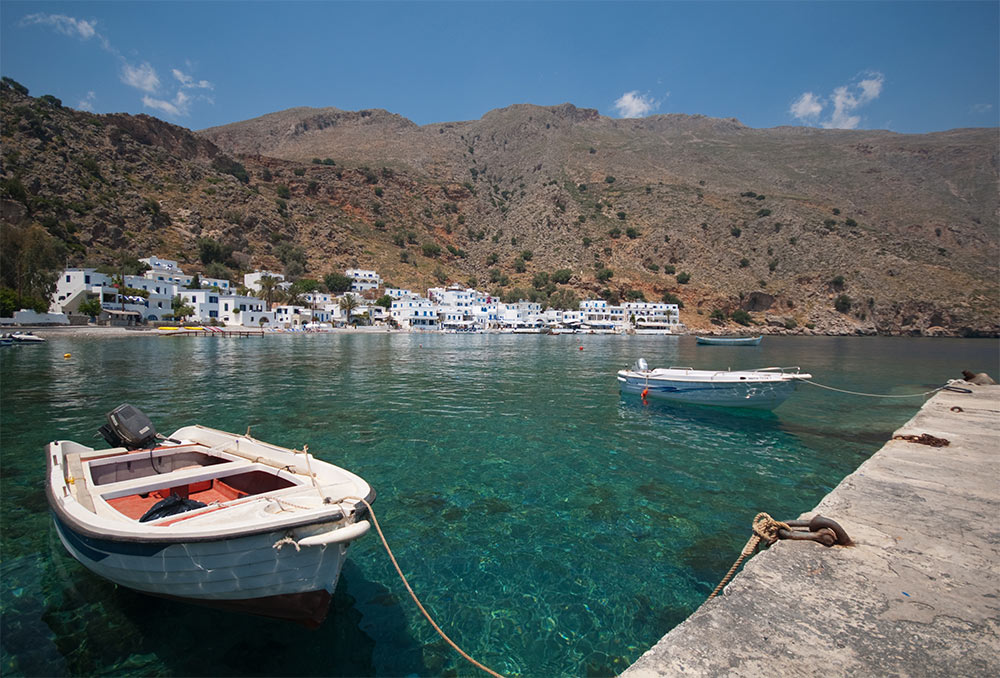
Loutro is a place for people who long for something different, a village characterized by its immense natural beauty, serenity and the uniqueness of no sounds of vehicles. There are no roads, no cars, the only access is by boat or on foot
Loutro, today
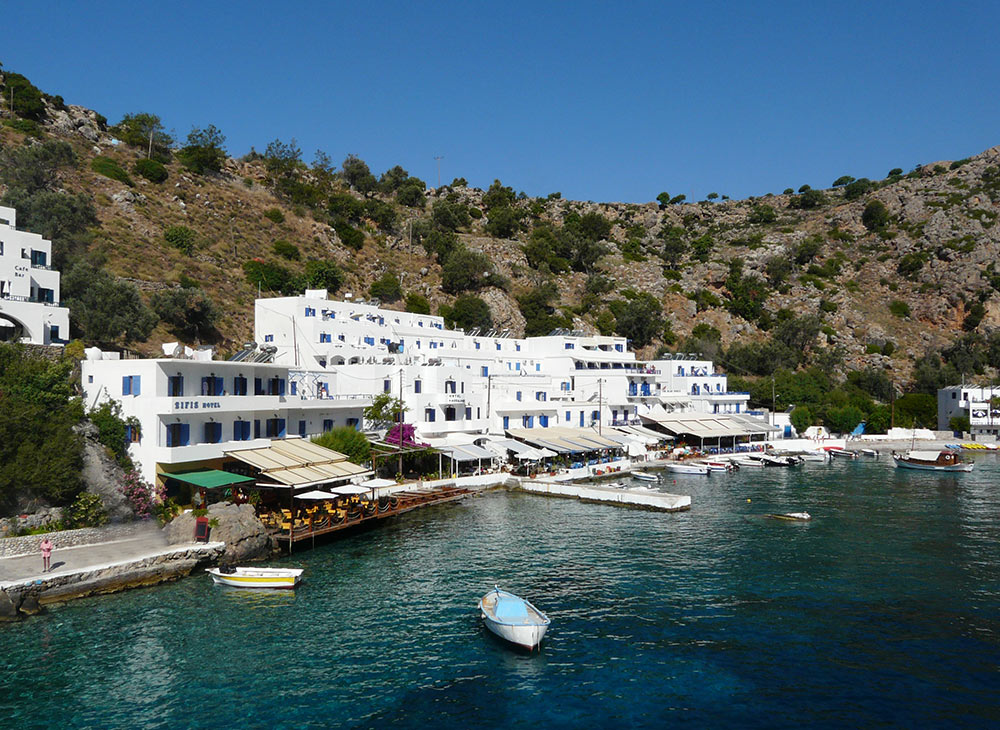
The seaside village is a bay resembling an amphitheatre. It is located at a distance of about 71 km south of Chania, at the end of Cape Mouri. Today Loutro is a main tourist attraction.
A small picturesque fishing village full of whitewashed houses with blue shutters. Loutro is made up of rooms and small pensions, tavernas, cafes, bistros and small shops, all with a view of the calm bay and its lighthouse. It is built on a bay encircled with pebbled beaches and small landing places where fishing boats and the ferries from Sfakia and Agia Roumeli anchor.
It is a village surrounded by beautiful beaches like Glyka Nera (Sweet water), Timios Stavros (Holy Cross), Pervolaki, Marmara as well as walking paths and historical sights.
Your promenades will take you through the pebbled beach into the terraces of the tavernas, cafes, the picturesque back paths to the scenic, countryside with its hills, gorges and mountains.
The weather will never disappoint you, always warm and sunny.
Loutro….historically
Loutro’s position in history is history itself…
Here you will find evidence that date back to the ancient times of Cretan Zeus and Apollo, to the Romans, the Christians, Apostle Paul, Saint Anthony, the Phoenicians, Venetians and so on…. The town established on the site of modern-day Loutro was once known as Phoenix, a place-name still preserved in the neighboring village of Phoenix.
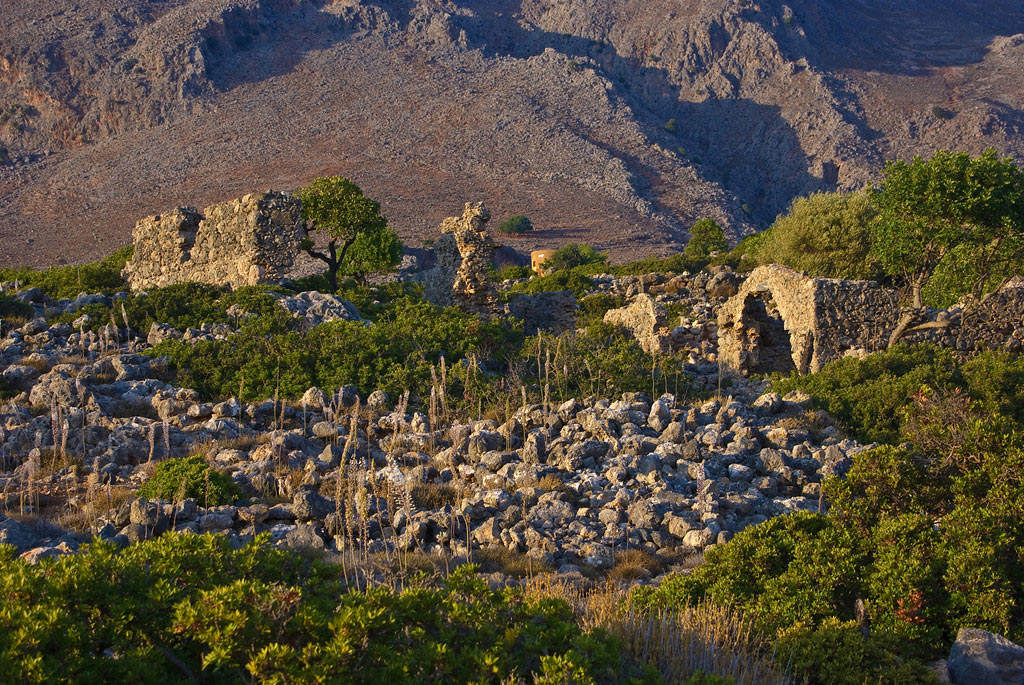
Loutro (old Phoenix) flourished during the Hellenistic and Roman periods, while it later became the home of Saracen corsairs and slavers. This situation changed when the Venetians arrived in Crete. They drove out the pirates and fortified Loutro with a small fortress whose ruins are still visible today.
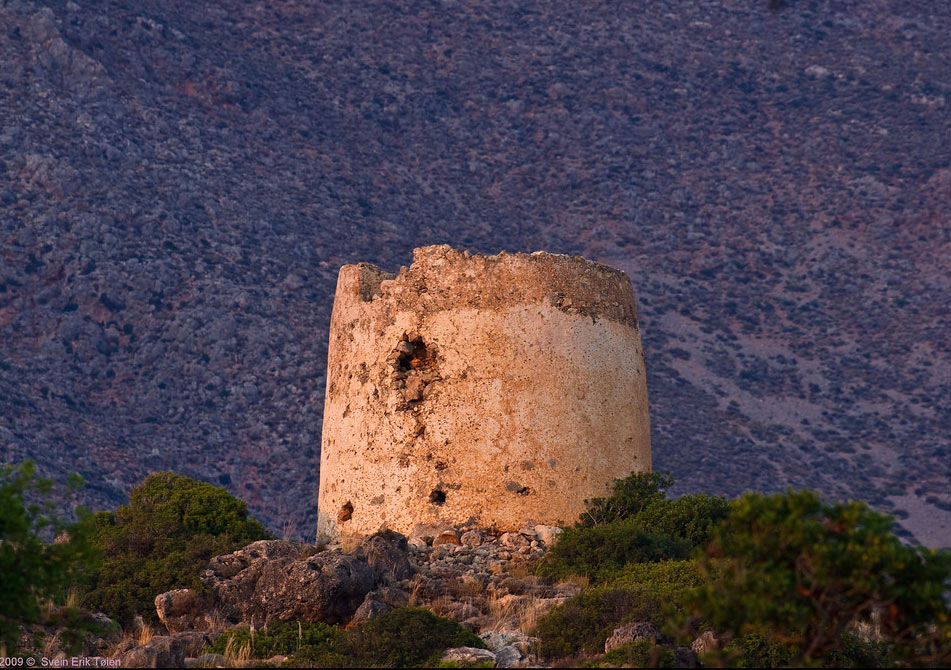
The Turkish occupation followed the Venetians. “Koules”, the Turkish fort above the village, was built after the 1866 uprising and was an attempt by the Turks to control the area and the harbour of Loutro which the Cretans were using as a base in their frequent revolts. Loutro harbour was used during the Dasakaloyannis rebellion and the 1821 uprising against the Turks was declared in Crete at Loutro.
The Turkish presence in the area had a minimal impact on the inhabitants, who were not easily tamed, in contrast to other areas in Crete and Greece where the more than 300 year occupation meant infiltration of the Turkish way of life. This is evident in the light haired, blue eyed locals who never intermarried with the Turks.
Once known as Katopolis ("city below" in Greek) Loutro was the summer option and sole harbour for the inhabitants of Anopolis ("city above" in Greek ). The enclosed bay and the small island in its entrance create a natural harbor where ships can be safe no matter how dire the weather conditions. "Loutro" (a place to bathe in Greek) derived its present name from baths which were found in the area.